




When tackling the challenge of maintaining large or even medium-sized floor areas, the choice of equipment is paramount. Specifically, for businesses like warehouses, shopping malls, hospitals, or manufacturing plants, investing in the right floor scrubber-dryer is a decision that directly impacts operational efficiency and cleanliness standards. The fundamental distinction for most users lies between walk-behind and ride-on floor scrubbers, two main categories of machines that revolutionize floor care. Understanding the nuanced differences in their configuration, coverage capacity, operational mobility, and long-term usage costs is essential for making an informed investment that truly benefits your facility’s specific needs. This detailed analysis will guide facility managers and cleaning professionals through the pros and cons of each type, ensuring optimal floor cleaning results.
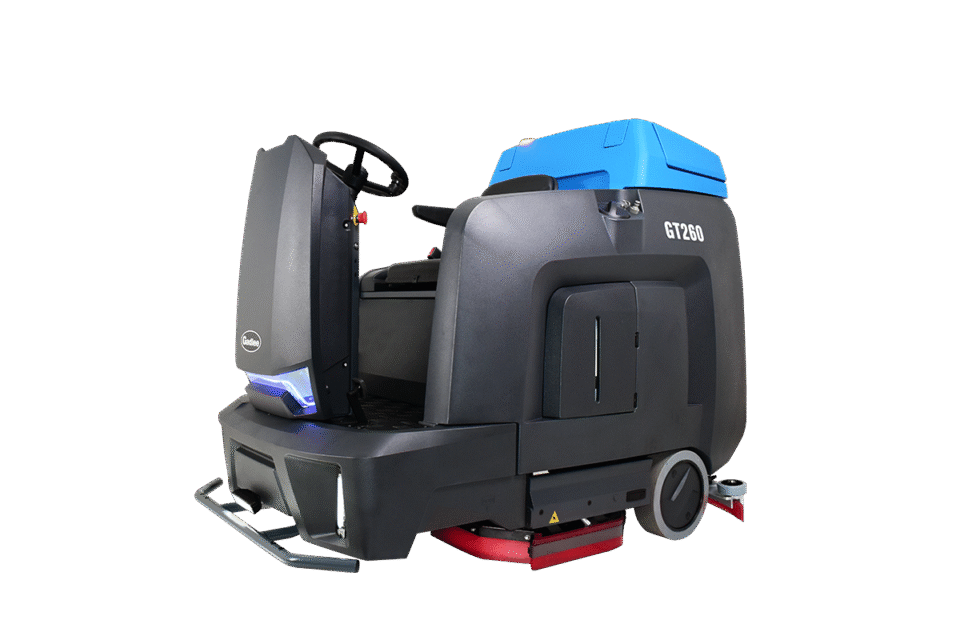
Analysis from the Perspective of Configuration Differences
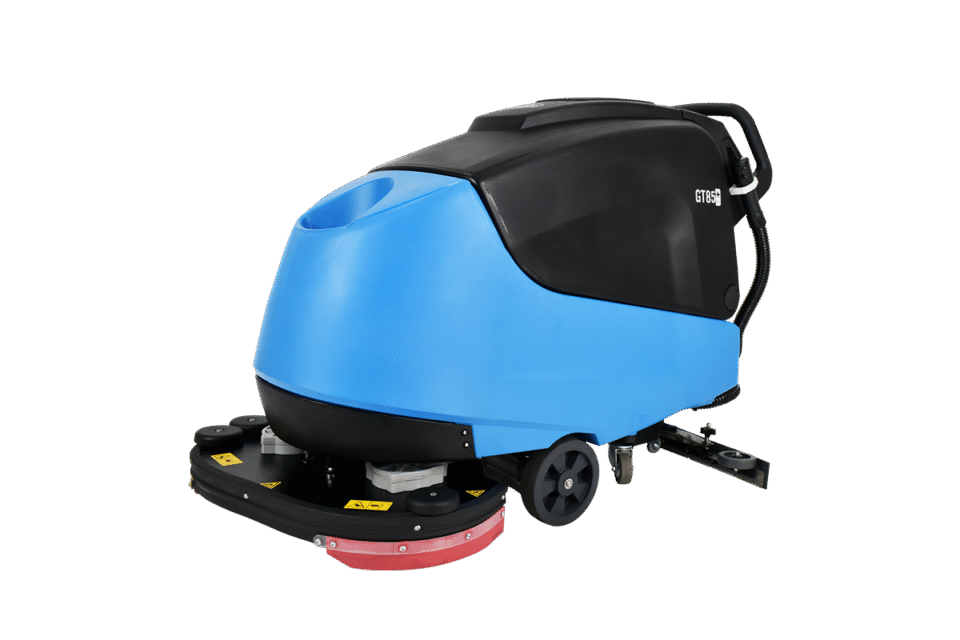
Floor scrubber-dryers, irrespective of their size, share common core components, but the way these components are integrated and powered distinguishes the walk-behind from the ride-on models. These machines are generally classified based on their operation: Walk-behind machines are maneuvered by an operator who trails behind them, while Ride-on scrubbers feature an on-board driving position, allowing the operator to steer and control the machine comfortably.
A key difference is often found in the scrubbing unit itself. While both can use disc or roller brushes, ride-on units typically accommodate wider scrubbing paths. The scrubbing path width is a direct determinant of the area that can be cleaned in a single pass, thus defining the machine’s efficiency. Furthermore, tank capacity drastically differs. Walk-behind models usually have smaller solution and recovery tanks, which necessitates more frequent draining and refilling—a factor that affects autonomy. Ride-on models, designed for expansive areas, incorporate significantly larger tanks, extending the operating time dramatically and reducing non-productive loading times.
Power supply is another critical configuration element in floor scrubbers.Smaller walk-behind scrubbers typically use batteries of 100 Ah or less, which provide limited running time and a smaller cleaning range. Conversely, larger walk-behind and ride-on scrubbers are powered by 200 Ah batteries, delivering longer operating hours and higher productivity. Another important factor is the traction motor. Most basic walk-behind models do not include one, requiring operators to apply more physical effort to push the machine during cleaning. In contrast, larger walk-behind and ride-on scrubbers are equipped with powerful traction motors that reduce operator fatigue and ensure smoother, more effortless operation.
Due to the greater complexity and capacity of their components, ride-on scrubbers feature a more robust and sophisticated configuration, designed to withstand heavy-duty and continuous cleaning operations.
Evaluating Coverage and Application Suitability
The choice between a walk-behind and a ride-on scrubber-dryer is heavily dependent on the sheer size of the area requiring maintenance and the nature of the application. Walk-behind machines are the preferred solution for smaller to medium-sized facilities, or areas that are highly congested and require precise maneuvering. Think of busy retail aisles, smaller workshops, kitchens, or cluttered hospital corridors. Their narrower scrubbing paths, typically ranging from 17 to 28 inches, translate into lower coverage rates, but this is often perfectly adequate for areas under 2,000 square feet. Furthermore, their compact design allows them to navigate tight corners and fit into storage spaces more easily.
In contrast, ride-on floor scrubbers are specifically engineered for maximum coverage. These behemoths of cleaning technology often have scrubbing paths exceeding 30 inches and are the only sensible choice for vast spaces—warehouses, convention centers, large manufacturing floors, and airport terminals—areas often exceeding 5,000 square feet. Their immense capacity means an operator can clean a massive area in a fraction of the time that a walk-behind unit would require. The increased speed and autonomy of the ride-on unit dramatically reduce the time spent on the cleaning task, directly translating into significant labor cost savings for large-scale operations. However, their size is also a limitation; they struggle to access very tight, intricate, or highly partitioned areas.
Mobility and Operational Ease for the User
Mobility is a core differentiating factor that directly affects the operator’s experience and the speed of the cleaning process. Walk-behind scrubbers require the operator to physically walk the entire cleaning route. Even equipped with a traction motor, the operator is constantly on their feet, which can lead to fatigue, especially during extended shifts. While these machines offer excellent maneuverability in confined spaces, the physical toll on the user can inadvertently reduce the overall efficiency towards the end of a shift. The frequent stopping for tank emptying and refilling further punctuates the cleaning cycle, reducing continuous operational flow.
The ride-on scrubber, by its very nature, prioritizes operator comfort and sustained high mobility. By providing an on-board driving position, the machine transforms the cleaning task from a laborious walk into a seated driving operation. This drastically minimizes operator fatigue, allowing for consistent, high-speed cleaning over many hours. The large recovery and solution tanks, coupled with powerful battery systems, ensure extended, uninterrupted operation across expansive floors. This improved comfort and the sheer speed and size of the machine mean that one ride-on unit can often replace the coverage of multiple walk-behind units, simplifying scheduling and supervision. In essence, the ride-on design is a productivity tool, maximizing the human resource by enabling them to cover more ground with less physical strain.
Comparison of Usage Costs and Maintenance Requirements
The initial purchase price is undeniably higher for a ride-on scrubber-dryer compared to a comparable walk-behind model, often by a significant margin. However, astute facility management understands that the true cost of ownership must encompass long-term usage, maintenance, and labor costs.
Labor Cost: For large areas, the ride-on scrubber provides an overwhelming advantage. By cleaning several times faster, the labor hours required for floor maintenance are substantially reduced. This cost saving over the machine’s life cycle often quickly offsets the higher initial investment, making the ride-on the more economical choice in the long run for large-scale applications.
Maintenance and Power: Both types require regular maintenance, but the larger, more complex systems in ride-on machines—including a dedicated drive motor, larger batteries (often 200 Ah), and more substantial scrubbing units—may incur higher individual component replacement costs. The battery type and its management are vital; the capacity and voltage of the battery system in a ride-on unit directly impact the possible number of cleaning cycles and, consequently, its maintenance schedule. Proper battery care is crucial for minimizing downtime. Walk-behind models, especially the corded or smaller battery-powered versions, generally have simpler mechanics, leading to lower component costs and simpler maintenance routines.
Ultimately, the choice should be guided by a thorough cost-benefit analysis where cleaning efficiency is prioritized. If a large area needs frequent cleaning, the initial capital expenditure on a ride-on scrubber is a strategic investment in long-term efficiency and reduced labor costs. Conversely, for smaller, congested spaces, the lower initial cost and adequate performance of a walk-behind model represent the most sensible financial decision. The selection should always align with the operational scale, ensuring that the scrubber-dryer provides optimal performance and maximized value for the user’s specific application.
 English
 Chinese
 German
 French
 Spanish
 Japanese